Flexible packaging plays a critical role in the frozen food category, especially in the UK market where expectations are high and margins are tight. Frozen food packaging is not only about keeping products cold, it is about protection, compliance, logistics and shelf confidence. Retail buyers look closely at packaging choices because they directly affect waste, returns and consumer trust.
This blog breaks down what UK retail buyers actually expect from flexible packaging for frozen food. It focuses on practical requirements rather than marketing claims, and explains how brands can align their packaging decisions with real retail approval criteria. At Aropack, we work closely with brands supplying frozen food into the UK, helping them choose packaging structures that meet buyer expectations without unnecessary cost or complexity.
Barrier Performance for Frozen Food Packaging
Barrier performance is one of the first things UK retail buyers assess when reviewing frozen food packaging. Frozen products face temperature swings, moisture exposure and physical stress throughout storage, transport and handling. If the packaging fails at any point, the retailer absorbs the risk.
Flexible packaging must protect against moisture ingress, freezer burn and oxygen exposure. Poor barrier performance leads to ice crystals, texture loss and visible quality issues, all of which trigger consumer complaints. Retail buyers expect packaging suppliers to understand these risks and specify materials accordingly.
For frozen food, barrier performance is not optional or negotiable. It is a baseline requirement for listing approval.
Moisture and Oxygen Control
Moisture barrier is critical in frozen food packaging because water migration causes freezer burn and product degradation. Oxygen barrier matters too, especially for products containing fats, proteins or prepared meals that are sensitive to oxidation.
Retail buyers often expect multilayer laminated films designed specifically for frozen conditions. These structures typically combine strength, seal integrity and barrier performance rather than relying on a single material. The exact structure depends on the product, storage duration and distribution model.
At Aropack, we guide brands through material selection based on real frozen supply chain conditions, not generic packaging assumptions. This helps reduce technical queries during retail approval and avoids costly rework later.
Seal Integrity and Cold Chain Reliability
Seal integrity is another major focus area for UK retail buyers. Frozen food packaging must remain sealed throughout freezing, storage and thaw cycles. Even small seal weaknesses can lead to leaks, contamination or pack failure.
Retailers look for consistent, repeatable sealing performance rather than theoretical specifications. They want confidence that the packaging works on the production line and holds up in real world conditions.
Flexible packaging for frozen food must support both automated and semi automated filling environments without compromising seal quality.
Why Seal Strength Matters More Than Film Thickness
Many brands assume thicker films automatically mean better performance. Retail buyers know this is not always true. Seal design, seal layer compatibility and correct sealing parameters matter far more than raw thickness.
A well designed seal layer ensures strong seals even at low temperatures, while a poor seal layer can fail regardless of film thickness. Buyers may ask about seal testing, peel strength and production validation to confirm reliability.
At Aropack, we support brands with technical guidance, helping them avoid seal related rejections during buyer review.
Sustainability Expectations from UK Retail Buyers
Sustainability is no longer a secondary conversation in frozen food packaging. UK retailers expect brands to show progress towards sustainable packaging wherever technically feasible. However, they also understand the limitations of frozen applications.
Retail buyers look for realistic sustainability decisions backed by technical reasoning. Overpromising or using unsuitable materials for frozen food raises red flags quickly.
Flexible packaging must balance sustainability goals with performance requirements, and buyers expect brands to be honest about those trade offs.
Recyclable Flexible Packaging for Frozen Food Applications
Recyclable mono material films are increasingly discussed in frozen food, but not every product is suitable. Retail buyers assess whether recyclable structures still deliver barrier, seal and durability performance under frozen conditions.
In some cases, recyclable solutions work well for short shelf life or simple products. In others, traditional laminated structures remain the safest option. Buyers prefer brands who explain these choices clearly rather than forcing sustainability claims.
At Aropack, we help brands explore recyclable and lower impact options where appropriate, while staying aligned with UK retailer expectations and technical reality.
Print Quality, Compliance and Shelf Confidence
Print quality matters in frozen food because packs are often viewed through frost, condensation or freezer doors. UK retail buyers expect clear branding, legible information and durable print performance that does not crack or fade at low temperatures.
Compliance is equally important. Mandatory information must remain readable throughout the product lifecycle. Smudged inks or distorted text can lead to compliance issues and delisting risk.
Flexible packaging for frozen food must support both visual appeal and regulatory clarity without compromise.
Retail Ready Packaging and On Shelf Performance
Retail buyers also consider how frozen food packaging performs on shelf and in freezer cabinets. Packs should stand, stack or lay flat as intended, without collapsing or sticking together.
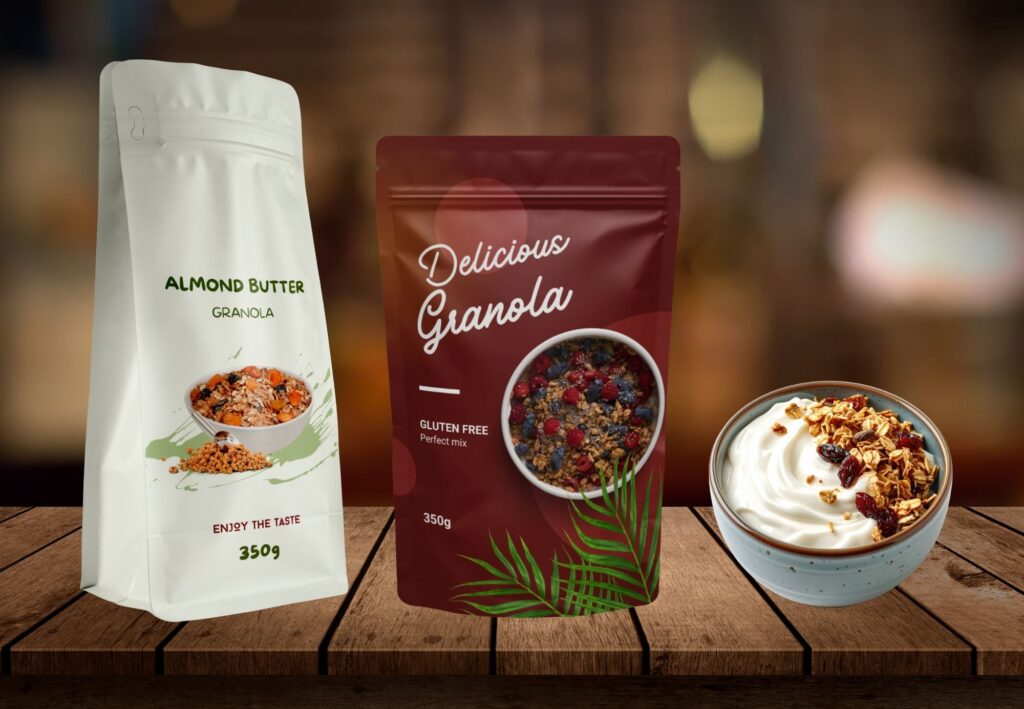
Flexible packaging formats such as stand up pouches or flat pouches are reviewed not only for cost, but for how they present in a frozen retail environment. Buyers value packaging that supports efficient stocking and clear product visibility.
Aropack works with brands to choose pouch formats and print finishes that hold up visually and physically in frozen retail settings, supporting smoother buyer conversations and stronger shelf presence.
Checklist for Frozen Food Packaging
Before presenting flexible packaging to a UK retail buyer, brands should review a few key points internally. Confirm the packaging structure is designed for frozen conditions, not ambient use. Validate seal integrity through production trials rather than assumptions. Ensure barrier performance matches the product’s shelf life and distribution model. Check that sustainability claims are accurate and defensible. Review print durability and legibility under frozen conditions.
This checklist does not guarantee approval, but it reduces avoidable objections and speeds up the buyer review process significantly.
Conclusion
Flexible packaging for frozen food is a technical decision first and a branding decision second, especially in the UK retail market. Buyers focus on barrier performance, seal integrity, sustainability realism and shelf reliability because these factors directly affect returns, complaints and operational efficiency.
At Aropack, we support frozen food brands by aligning packaging structures with what UK retail buyers actually look for, not what sounds good in theory. From material selection to print and format decisions, our approach helps brands move through retail approval with fewer delays and more confidence. If you are planning frozen food packaging and want practical, buyer focused guidance, Aropack is ready to support you at every stage.